

SKIN CARE / SKIN CANCER

SKIN CARE / SKIN CANCER
Skin Cancer Checks & Skin Checks in Davoren Park
Australia has one of the highest rates of skin cancer in the world. Regular skin checks can help you become familiar with your skin and identify changes that may need assessment by a medical professional.
At Playford Medical Centre in Davoren Park, our GPs can assess moles, spots, skin lesions and other skin changes that may require further investigation. Where clinically appropriate, your GP can discuss suitable next steps, which may include monitoring, further assessment, referral to a specialist, or removal of a skin lesion.
Why Are Skin Checks Important?
Skin cancer can develop on areas of the body that receive regular sun exposure, but it can also occur on areas that are less exposed to sunlight. Checking your skin regularly can help you notice changes that may otherwise go unnoticed.
A skin check may be particularly worth discussing with your GP if you have a history of significant sun exposure, have previously had skin cancer, have many moles, have noticed a new or changing lesion, or are concerned about a particular area of your skin.
A GP can assess your concerns and determine whether further investigation is appropriate.
What Happens During a Skin Check?
A skin check involves discussing your concerns and examining areas of your skin that may require assessment. Depending on your individual circumstances, your GP may examine a particular mole, spot or lesion or assess multiple areas of your skin.
Your GP may ask about:
-
Any new or changing moles or spots
-
Changes in the colour, size or shape of a lesion
-
Previous skin problems or skin cancer
-
Your history of sun exposure
-
Any skin lesions that bleed, itch, crust or do not heal
-
Any areas of skin that you are concerned about
If a lesion appears concerning, your GP can discuss the appropriate next step with you. This may include monitoring the area, arranging further investigation, referral to another healthcare professional, or discussing whether removal is appropriate.
Skin Cancer Warning Signs
It is important to pay attention to changes in your skin. Not every unusual-looking mole or skin lesion is cancerous, but changes should be assessed when you are concerned.
Some signs that may warrant medical assessment include:
-
A mole or spot that changes in size, shape or colour
-
A new spot or lesion that looks different from others on your skin
-
A sore or spot that does not heal
-
A lesion that repeatedly bleeds or develops a crust
-
Persistent itching, irritation or oozing from a lesion
-
A scaly, rough or thickened patch of skin
-
A spot that becomes painful or tender
-
Changes in an existing mole
-
A skin lesion that continues to change over time
Changes can occur on any part of the body, including areas that may not receive frequent sun exposure.
If you notice a new or changing lesion, speak with your GP rather than trying to diagnose it yourself.
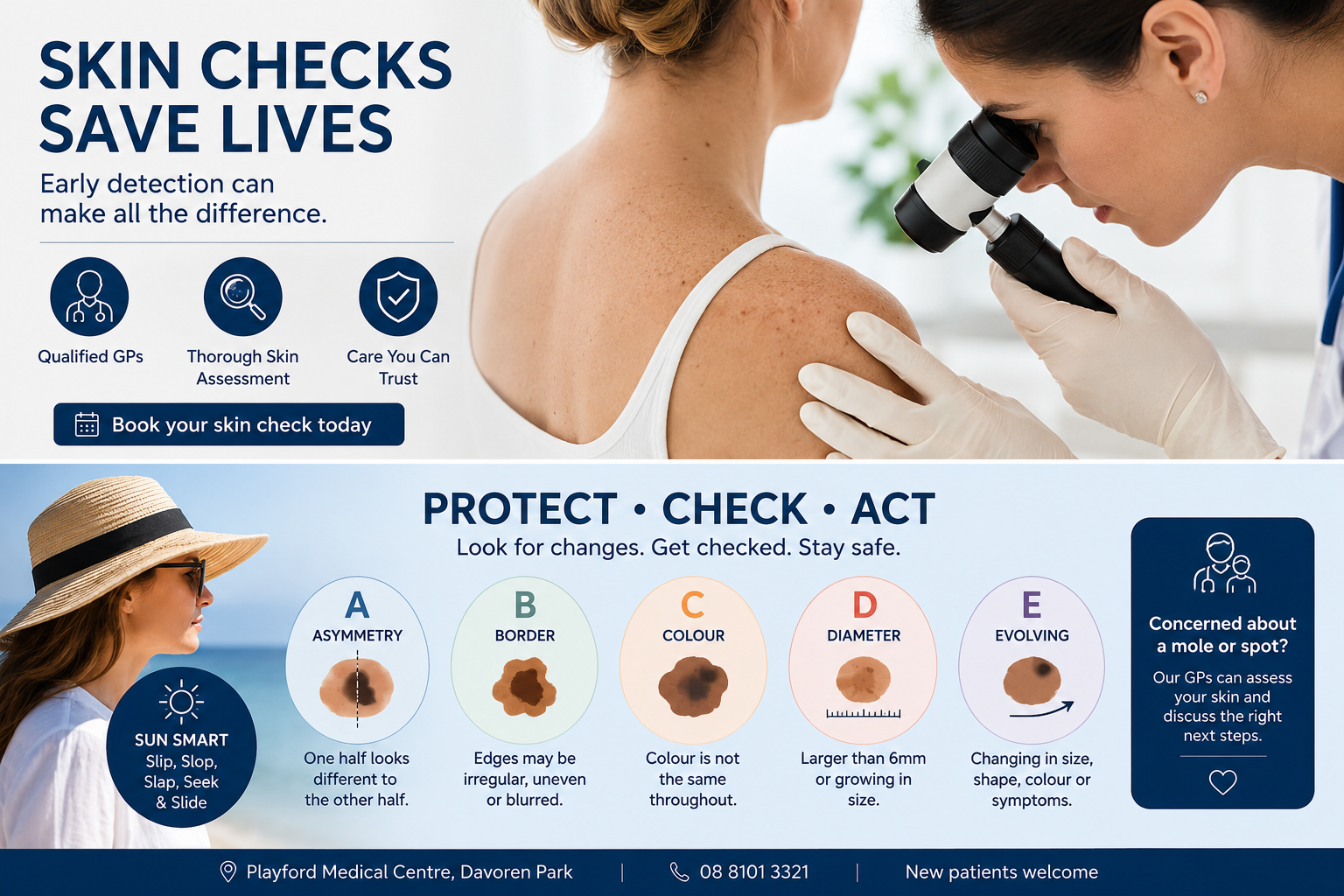
The ABCDE Guide to Moles
The ABCDE guide is one way of remembering some features that can be associated with concerning moles:
A – Asymmetry: One half of the mole looks different from the other half.
B – Border: The edges may be irregular, uneven or poorly defined.
C – Colour: The colour may vary within the same mole or change over time.
D – Diameter: A mole that is larger than others may warrant assessment, particularly if it is changing.
E – Evolving: The mole changes in appearance, size, shape, colour or symptoms over time.
The ABCDE guide is not a diagnostic tool, and skin cancers can look different from one person to another. If you are concerned about a mole, spot or lesion, a medical assessment is recommended.
Skin Cancer Risk Factors
Several factors can contribute to a person’s risk of developing skin cancer. These can include cumulative exposure to ultraviolet (UV) radiation, a history of sunburn, having numerous or atypical moles, a previous history of skin cancer and certain individual risk factors.
Living in Australia means that many people experience significant exposure to UV radiation throughout their lives. Sun protection is therefore an important part of looking after your skin.
Protective measures can include seeking shade, wearing protective clothing, using sunscreen appropriately and taking extra care when UV levels are high.
Regularly becoming familiar with your own skin can also help you notice changes.
Skin Lesion Assessment and Removal
If you have a mole, spot or other skin lesion that concerns you, your GP can assess it and discuss the available options with you.
Where clinically appropriate, some skin lesions may be suitable for removal. The method used depends on the type, location and characteristics of the lesion and your individual circumstances.
Your GP will discuss the procedure, potential risks and benefits, aftercare and whether further testing or pathology may be required.
Not every skin lesion needs to be removed. In some circumstances, monitoring a lesion or arranging further assessment may be more appropriate.
If you have noticed a new or changing lesion, make an appointment to discuss it with a GP.
When Should You Book a Skin Check?
You do not need to wait until a mole or spot becomes painful before seeking medical advice. If you notice a change in your skin or have a particular lesion that concerns you, you can make an appointment with a GP.
You may also wish to discuss your individual skin cancer risk with your GP if you have:
-
A personal history of skin cancer
-
A family history of skin cancer
-
Significant past sun exposure or sunburn
-
Numerous moles or unusual-looking moles
-
A new or changing skin lesion
-
A lesion that repeatedly bleeds, crusts or does not heal
-
Concerns about a particular area of your skin
Your GP can assess your concerns and advise whether further investigation or follow-up is appropriate.
Skin Checks in Davoren Park
Playford Medical Centre provides general medical care for patients in Davoren Park and surrounding areas. Our GPs can assess skin concerns as part of your medical care and discuss appropriate management based on your individual circumstances.
If you are concerned about a mole, spot, skin lesion or other change to your skin, booking an appointment allows you to discuss your concerns with a GP.
Our practice is located in Davoren Park, South Australia, making medical care convenient for patients in the local community and surrounding northern Adelaide suburbs.
Protecting Your Skin
Skin checks are only one part of looking after your skin. Protecting your skin from excessive UV exposure is also important.
When UV levels are high, consider using a combination of sun protection measures, including:
-
Wearing protective clothing
-
Wearing a broad-brimmed hat
-
Seeking shade where possible
-
Wearing sunglasses
-
Applying sunscreen appropriately
-
Limiting unnecessary exposure to direct sunlight
It is also useful to become familiar with the appearance of your own skin so that you can identify changes and discuss them with your GP.
Book a Skin Check in Davoren Park
If you have noticed a new or changing mole, spot or skin lesion, or you simply have concerns about your skin, speak with a GP at Playford Medical Centre.
Our GPs can assess your concerns, discuss your individual circumstances and recommend appropriate next steps where required.
Book an appointment with Playford Medical Centre in Davoren Park today to discuss your skin concerns.
Warning signs of possible skin cancer
• Change in size
• Change in shape
• Change in colour
• Redness/inflammation
• Painful
• Itchiness
• Bleeding
• Oozing
Are you at risk of skin cancer?
• People with sunspots
• Fair skinned
• Over the age of 40
• Organ transplant patients
• Long periods of sun exposure
• More than 50 moles
• Family history

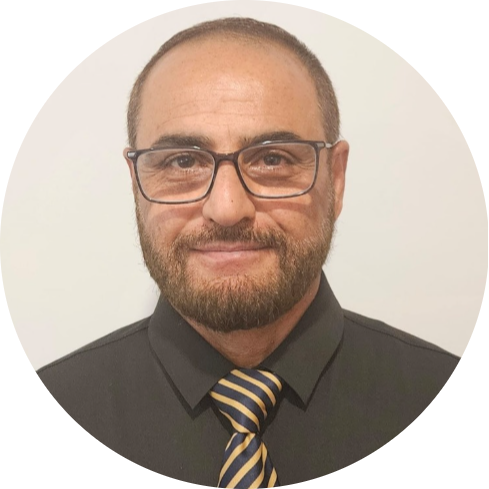
Dr. Sadiq Assafi – Skin Cancer Specialist
MBCHB, AMC, DCH Dip, AIM Dip, FRACGP , ABAM (American Board of Aesthetic Medicine)(Skin cosmetic), Skin Cancer medicine DIP program and Dermatoscopy DIP Program (Bond Uni) and Skin Cancer medicine Cert (skin cancer college of Queensland Uni ). Surgical advance head and neck and general skin flaps (Australian college of Cutaneous Oncology), Lecturer in Dermatology and Family Medicine in Wasit University.
Services avaliable: Skin cancer, skin check, mole mapping, surgical and medical treatments, cosmetic procedures